How We Clean Buried Downspout Extensions
We use an extensive, and expensive, array of highly specialized tools and nozzles specifically sized and chosen for residential downspout extensions.
Where Do Buried Downspouts Go?
Many homes have downspouts that connect to underground extensions. They should guide rainwater away from the home and end in a clear exit point, usually a 4" cap in the yard. They are very commonly lost. Just a small layer of grass can stop the caps from opening. These lines also catch debris over time, especially shingle gravel.
A clogged or covered line can send hundreds of gallons of water back towards your basement or crawlspace. In most cases we can clear those clogs and return the line to service. Ideally we do this before the disaster as maintenance, but if it's too late for that we can definitely help prevent the next one.
Somehow we ended up knowing a lot about downspout extensions. We're a big hit at parties. If you want the deeper dive, we've put together short articles covering the most common questions at our Learn page.

Why They Need Maintained
Buried downspout drains are very easy to forget about or ignore until there's an issue like a flooded crawl space or basement. Ideally, that is avoided by maintaining these. All that is needed is a cleaning once every three to five years to flush out all of the shingle gravel and other debris that builds up that rainwater just can't wash away.
Here in Indiana in particular, most of us are on such flat land that these drains simply don't have much slope to them. They do require occasional cleaning to stay fully operational. These are the most common issues that form in the downspout extensions we work on.
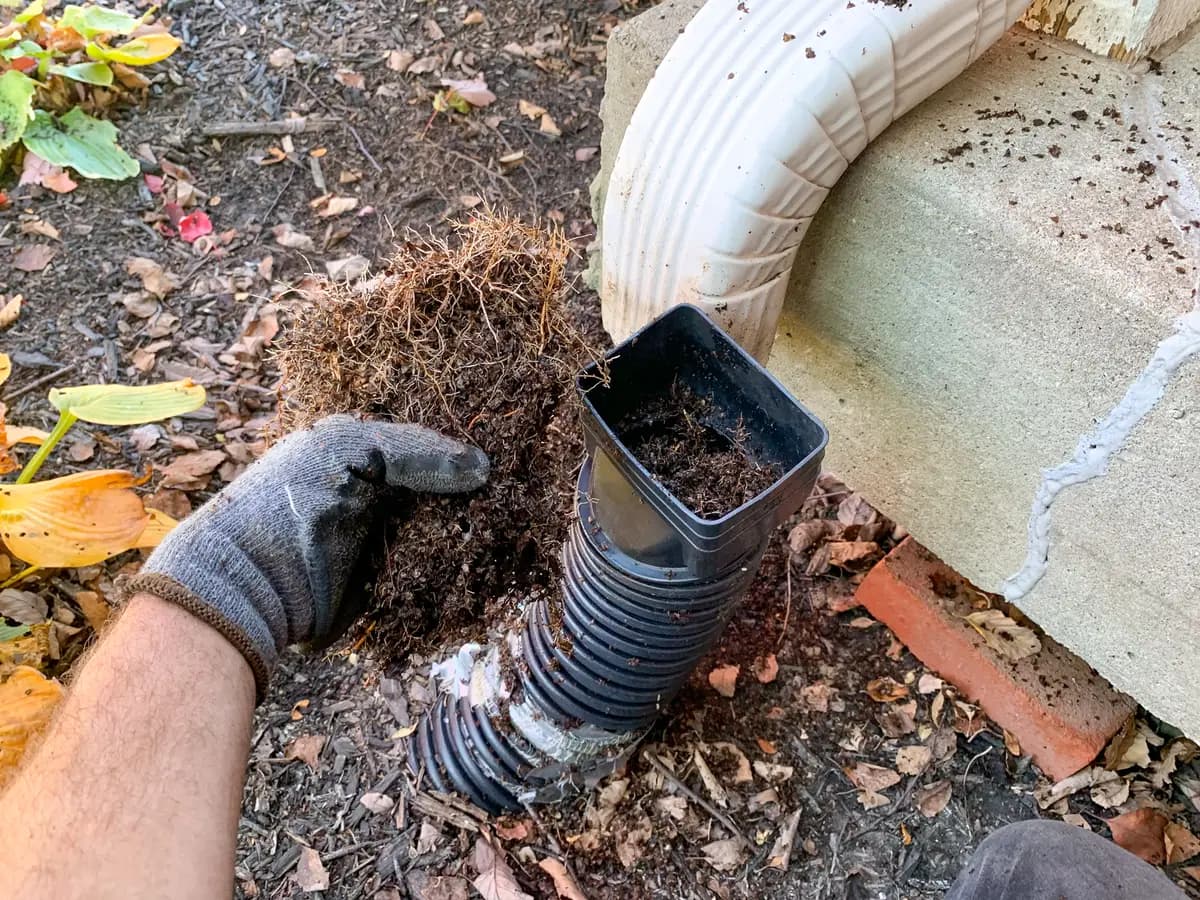
Shingle Gravel (90%+ of Jobs)
Over 90% of homes have asphalt shingle roofs, and every one of them is constantly shedding coarse mineral granules. These granules wash into gutters with every rain, flow through the downspouts, and settle into the corrugated ribs of your buried pipes.
Over 2–3 years, the gravel compacts into concrete-like plugs. A garden hose can't move it. Drain chemicals can't dissolve mineral material. This requires equipment operating at 5,000 PSI with specialized nozzles — equipment that isn't available to consumers. We typically remove 3–5 lbs of material per drain.
Lost Cap
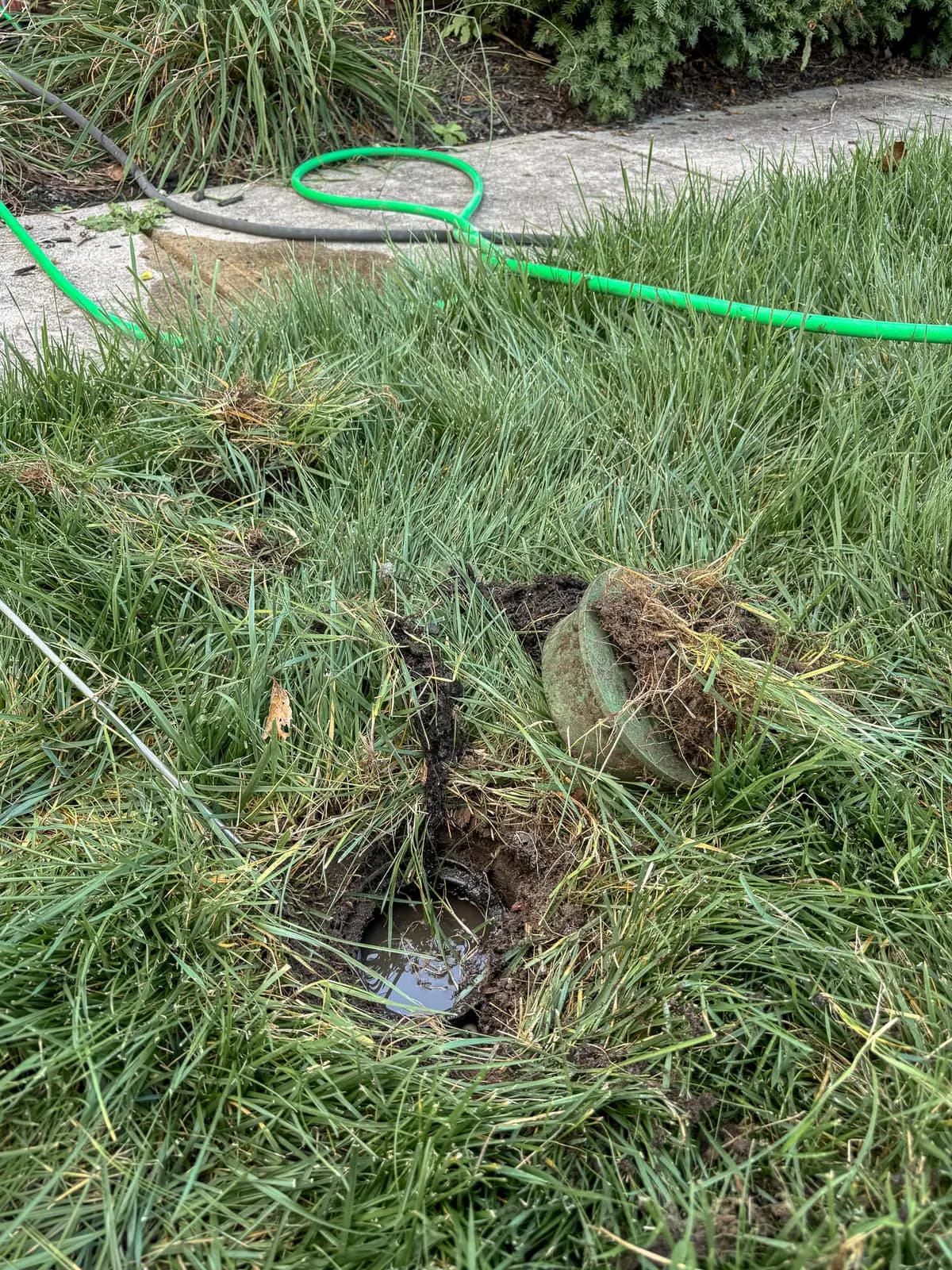
Caps get buried under grass, mulch, or landscaping. Once buried, they can't pop up or drain, and the pipe automatically backs up toward the foundation. Buried caps also let soil infiltrate.
This is one of the most common issues we encounter — roughly half the drain exits we service are buried or missing entirely.

Root Intrusion
Tree and shrub roots seek moisture. Corrugated pipe has joints and ribs that roots can penetrate, growing into the pipe and creating blockages that catch debris and compound over time. Root intrusion is more common in older installations and near mature trees.
Our jetting equipment can cut through most root intrusions with specialized cutting nozzles. For severe cases where roots have compromised the pipe structure, we'll document the damage and quote a section replacement.
Never had these cleaned before? Not sure where your exits are? We can figure all of that out.
Get your instant priceDownspout Extension Cleaning Process
We have a tried and true process for locating, lightly excavating, and clearing lost or clogged downspout extensions. It's even better as maintenance before a problem is known. This is only an overview, but most services are similar.

Before We Arrive
A few things that help everything go smoothly:
- Decide which drains to service. We charge per downspout extension, even if multiple share an exit. If you're not doing all of them, mark the ones you'd like cleaned — painter's tape, small flags, or just a note in your booking works great.
- We'll need water access — a working exterior spigot is all we need.
- Keep about 20 feet clear around the work area — no people or pets nearby during jetting, just for safety.
None of this is a dealbreaker if you forget. We'll figure it out. But it helps.
Find All Exit Points
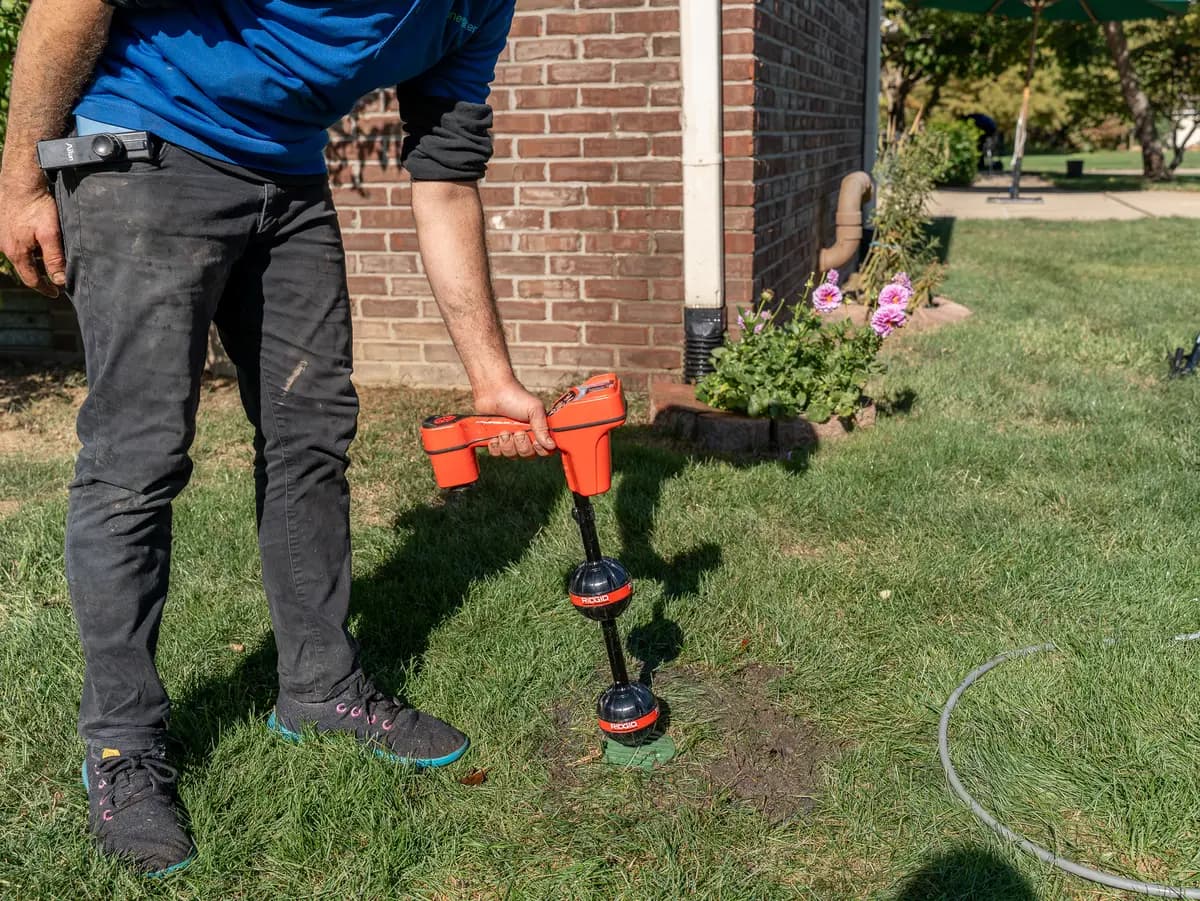
We will locate the exit cap for each downspout extension. When one is not obvious, we have multiple tools to locate it, including a radio locator that we can send in from the downspout side to trace the pipe and pinpoint the end. We will neatly excavate around any hidden caps, usually no more than a couple of inches, and we'll flag them for you.
Penetrate Any Clogs
A preliminary pass from the exit back to the downspout will identify any blockages. We have a range of specialized tools to get through these blockages without harming the pipe. We cycle through the necessary bits until the debris is loose enough to come out as one piece (typical for roots) or can be flushed out in the next step.

Flush and Verify
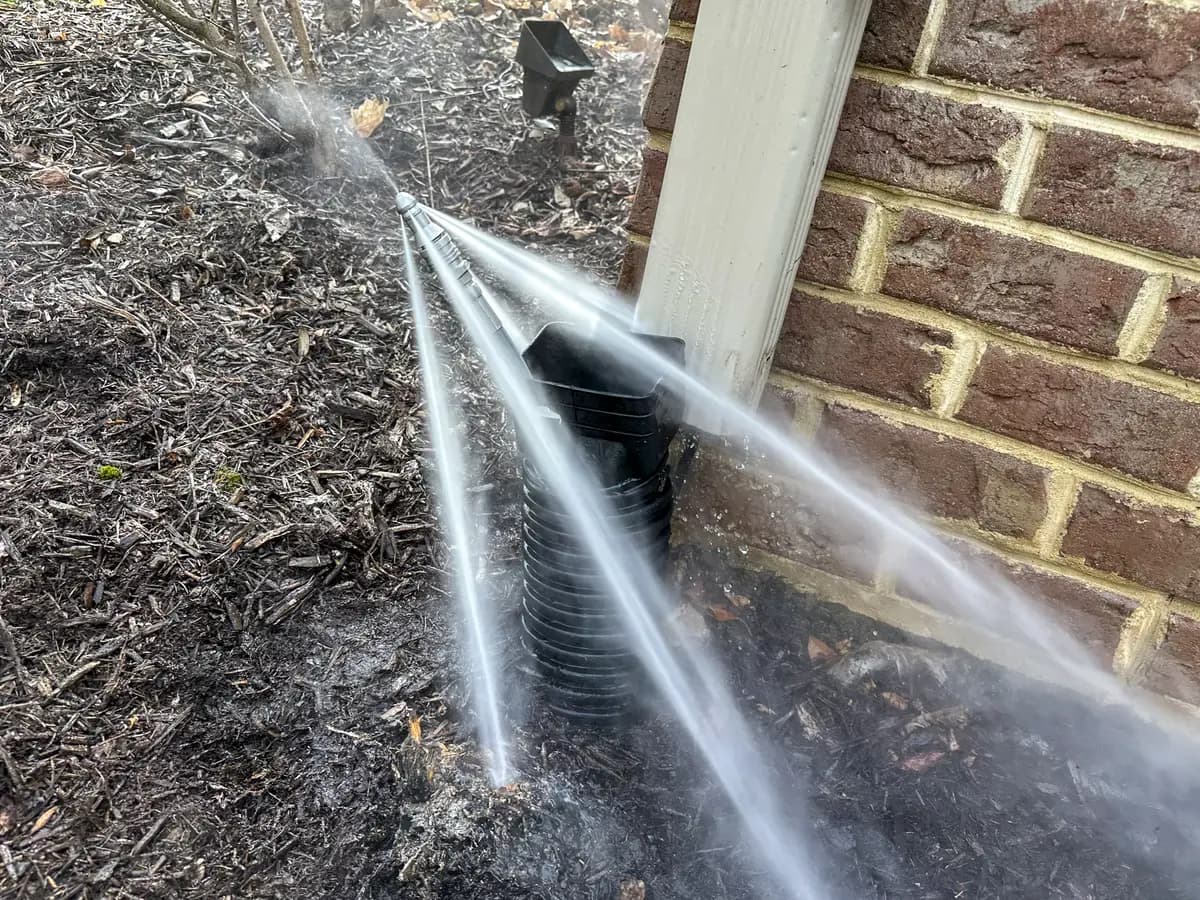
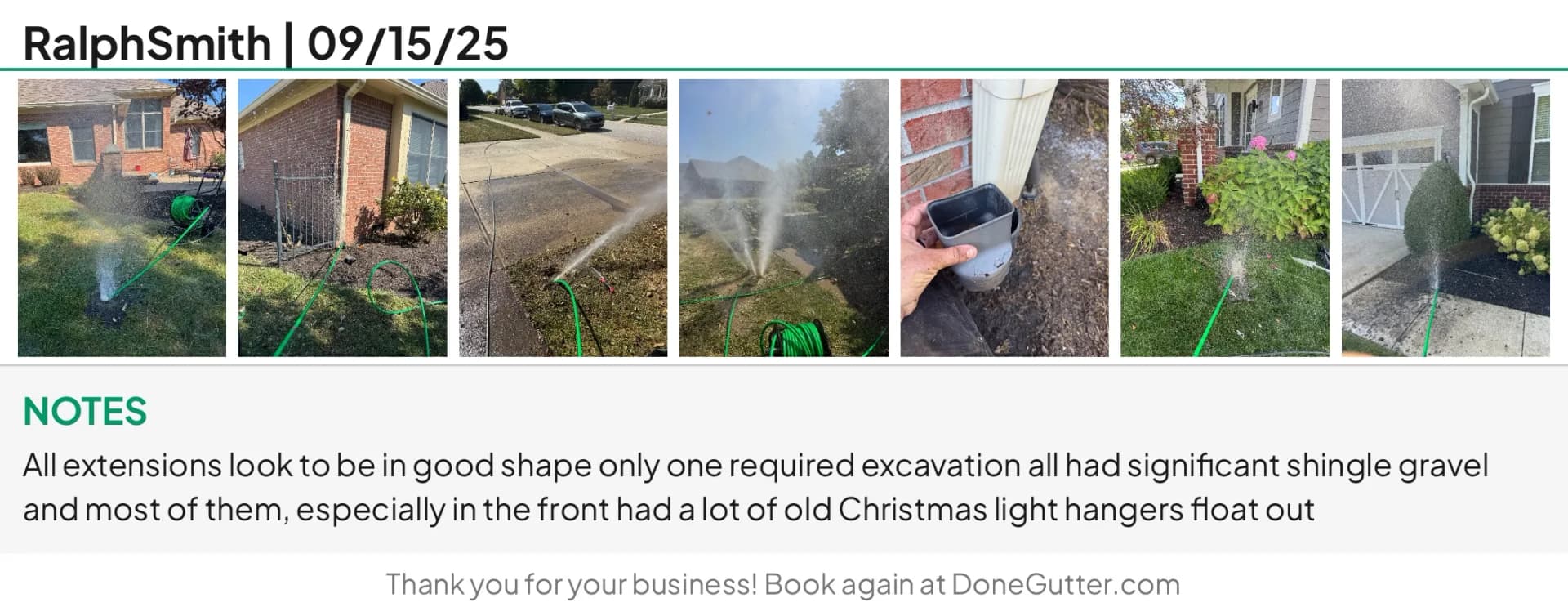
This is the critical step, where we get rid of shingle gravel or other sediment that really leads to the bigger issues like root systems. Again, we have multiple bits depending on the situation. When we start, we'll see thick debris and very dark muddy water exit immediately. It'll lighten as we continue. We will repeatedly make passes until the water runs clear and the line is able to rocket from end to end without interruption or any feeling of resistance through the jetting line. This is generally the part we photograph — a clean white geyser of water verifying that drain is fully clear.
Overview & Photos Emailed
After service, we'll email your invoice with a review of what we saw, what came out, your verification photos, and any recommendations we have. Sometimes we might even be able to quote repairs or upgrades for you. You can review at your convenience and then pay online.
See what it costs for your home
Starts at $299 for up to 3 drains · $50 each additional
Get Your Instant Price